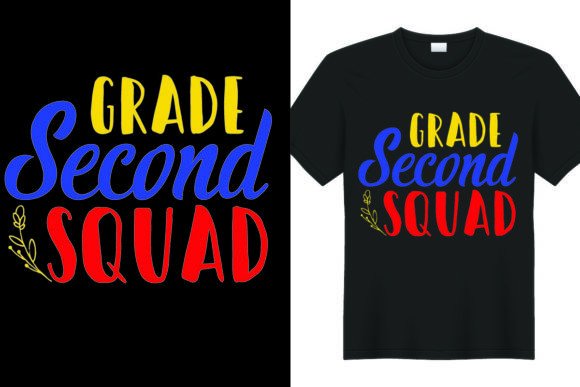
Back to School Second Grade Squad
A Designer’s First Look: Bright, Friendly—and Built for Real Stitching
When I opened Back to School Second Grade Squad for the first time, I wasn’t scanning for clipart charm—I was checking for embroidery readiness. This isn’t just a cute phrase on a screen. It’s a machine embroidery design I’m seriously considering for a custom embroidered tote bag series I’m launching for local teachers and parents this August. The layout is clean and centered, with bold, rounded lettering and playful icons—think pencils, apples, and smiling stars—that sit comfortably within a balanced visual frame. It feels warm and inclusive, not overly cutesy or age-restricted. That matters: second graders are confident, curious, and starting to develop real personality—and this design reflects that without leaning into cartoon overload.
Where It Shines: Sweatshirts, Totes, and Thoughtful Personalized Gifts
In real-world use, Back to School Second Grade Squad lands best on mid-weight fabrics where stitch clarity holds up: cotton twill tote bags, fleece-lined sweatshirts, and structured aprons for classroom helpers. I stitched a sample onto a navy cotton canvas tote using medium-weight cutaway stabilizer—and the satin-stitched outlines popped, while the fill areas stayed smooth and even. No thread nesting, no puckering. That’s a strong sign it’s been digitized with commercial embroidery in mind.
It also works well as an embroidered patch—especially when backed with iron-on adhesive for quick application on backpacks or lunchboxes. For baby embroidery? Use caution: the lettering is legible at 3.5", but smaller than that, fine details (like the tiny star highlights) risk blurring. As a holiday embroidery piece—say, on a tea towel or pillow cover for a “first day of second grade” keepsake—it adds nostalgic warmth without feeling dated.
Where to Pause: Texture, Scale, and Fabric Realities
This isn’t a one-size-fits-all embroidery file. On textured fabrics like terry cloth or heavy linen, the finer elements—especially the inner lines of the pencil icon or the small dot accents—can disappear under surface variation. On stretchy fabric like jersey tees, you’ll need excellent stabilization and possibly a slight reduction in overall size to prevent distortion during stitching.
Dark fabric demands thoughtful thread color choices. The design’s default palette assumes contrast, but if you’re stitching on charcoal heather or burgundy, test your thread selection on scrap first—especially for light-colored fills. And avoid placing it near seams, curved surfaces like cap fronts, or layered garments (e.g., hoodies with pockets underneath), where hoop clearance and fabric tension become unpredictable.
Small Hoop Reality Check
If you’re working with a 4x4 hoop, Back to School Second Grade Squad fits—but just barely. There’s little margin for repositioning or alignment tweaks. For consistent results across batches (say, 20 matching teacher tote bags), I’d recommend using a 5x7 hoop. That extra space gives breathing room for precise placement and reduces the chance of hitting hoop edges mid-stitch.
What It Adds to Your Finished Product—Beyond Cuteness
This design quietly lifts perceived value. When stitched cleanly on a quality tote or sweatshirt, it reads as intentional, handmade, and thoughtfully branded—not generic or mass-produced. Parents notice that. Teachers appreciate it. Etsy buyers scroll past dozens of “back to school” listings daily; Back to School Second Grade Squad stands out because its balance and spacing feel *designed*, not assembled.
It supports brand consistency too—if you’re building a small shop around educational milestones (first day, report card celebrations, end-of-year gifts), this fits neatly into a cohesive visual language. And unlike some overly detailed graphics, it scales well for digital embroidery file previews and printable mockups. You can show it clearly in both light and dark background renders without losing legibility.
Practical Notes Every Embroidery Designer Should Run Through
- Test first—Always run a sample on scrap fabric matching your final product’s weight and texture.
- Check stitch density—High-density fills look rich but can stiffen lightweight fabrics. Adjust underlay or reduce density if needed for baby items or kitchen towels.
- Confirm hoop size compatibility—Don’t assume it fits your smallest hoop without measuring the actual design dimensions.
- Inspect small details—Zoom in on the SVG or embroidery file preview: Are star points sharp? Is letter spacing even? Does the apple stem read as a distinct element?
- Try black-and-white mockups—This reveals contrast issues before thread is loaded.
- Use proper stabilizer—Medium cutaway for stable fabrics; tear-away with topping for knits.
- Verify licensing—Since this is listed as a digital download for T-Shirt Designs and Graphics, confirm whether your intended use (e.g., selling embroidered totes on Etsy) falls under permitted commercial embroidery terms.
Final Thought: A Reliable, Human-Centered Design Asset
Back to School Second Grade Squad isn’t flashy—but it’s dependable. As a designer who’s seen hundreds of “school-themed” files fall apart under real stitching conditions, I appreciate how thoughtfully this balances friendliness with function. It doesn’t overpromise detail, and it doesn’t underserve the maker. Whether you’re embroidering a single personalized gift or producing a batch for your craft business, it delivers clarity, warmth, and quiet professionalism. Just remember: great embroidery starts with smart prep—not just pretty pixels. Test it. Tune it. Then let it do what it does best: make second grade feel special, one stitch at a time.